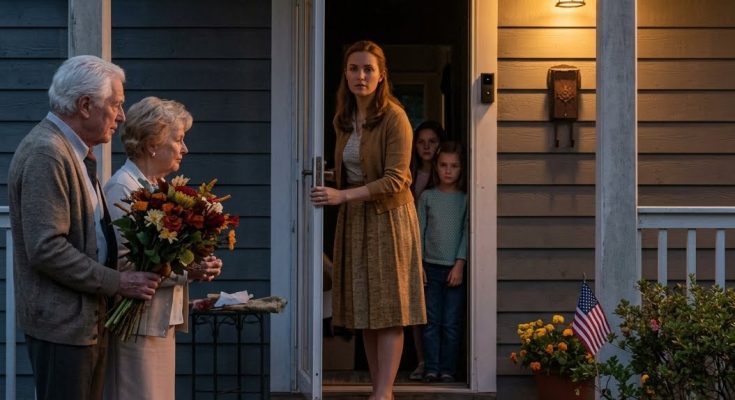
My name is Renee, and I was thirty-four years old the first time I understood that, for some people, family love is mostly a performance.It is something maintained carefully in public and withheld quietly in private. Something that looks like devotion from a distance, then reveals itself as something else entirely when the distance closes and the need becomes real.I did not understand that then.I would.My son Marcus was eight years old when he was diagnosed.He was sitting on the paper-covered examination table in a blue shirt with a small dinosaur stitched over the chest pocket. He had worn that shirt three days in a row because it was his favorite, and because at eight years old, you do not yet understand that some occasions require different clothes. His legs swung over the edge of the table because his feet did not reach the floor. He was humming softly to himself, some cartoon theme song he had watched that morning before we drove across town to the pediatric clinic.The office smelled like hand sanitizer, coffee, and the faint rubbery scent of new medical gloves. Outside the window, cars moved slowly through a gray Ohio morning, their tires hissing over wet pavement. A small American flag was taped to the receptionist’s window near a stack of school physical forms. Everything looked ordinary, which made what happened next feel even more impossible.The doctor spoke carefully.“Renee,” he said, his voice measured and low, “the tests indicate acute lymphoblastic leukemia.”The words arrived in a specific order. My brain processed them, understood them, and then offered me, in exchange, a completely useless thought.The shirt needs washing.That was all I had. That was the thought available to me in that moment.
Marcus looked up at me after the doctor finished. His face was open and trusting, still more interested in whether we would stop for fries on the way home than in whatever adults were saying above him.
“Is it bad?” he asked.
I swallowed hard.
“We’re going to take care of it,” I told him.
He nodded, apparently satisfied, and went back to humming.
I need to tell you something about my family before I tell you what happened next.
My parents, my mother Sandra and my father Gene, had never fully forgiven me for my divorce.
That sounds like a strange thing to say, but it is accurate. My ex-husband, Kevin, had come from a family with money and standing in our community. His parents belonged to the country club outside town. His mother served on charity committees and appeared in local newspaper photographs wearing pearls and a careful smile. His father owned a small commercial real estate business and knew the mayor well enough to call him by his first name.
It was the kind of family my mother referenced in conversation with a particular warmth she never quite used when talking about her own.
When our marriage ended, when I ended it after years of emotional absence and financial irresponsibility on Kevin’s part, my mother received the news with a tightness around her mouth that never fully went away.
She did not say I was wrong to leave. She was too careful for that.
She simply became, from that point forward, slightly less available. Slightly more occupied. Present at holidays, but somehow elsewhere. She would answer the phone with a pause just long enough to make me feel like an interruption. She would ask about the children but rarely ask about me. When I needed help, she would become gentle and vague in a way that made refusal feel like the natural outcome of the conversation.
It was the kind of withdrawal that is impossible to confront directly because it never announces itself. It just accumulates quietly until one day you realize the distance between you has become a geography.
My father followed her lead.
He always had.
So when Marcus was diagnosed, I was already navigating that landscape. I was already accustomed to asking for less than I needed. I was already practiced at reading the particular silence that meant, Don’t push.
But Marcus had leukemia. I had two other children. Sometimes you have to push anyway.
I was a single mother of three.
Marcus was the oldest at eight. Then came Dani, who was six, bright and watchful, with her brother’s same dark, steady eyes. Her full name was Danielle, but Marcus had called her Dani from the time she was a toddler, and the name stayed. Then there was Theo, who had just turned four and still pronounced certain words incorrectly in ways that made Marcus laugh every time without fail.
Kevin lived forty minutes away. He paid child support when he felt like it. He called on birthdays, approximately. In the two years since our separation, he had made it quietly clear that his involvement in our children’s daily lives was something he considered optional.
My parents lived twelve minutes from my apartment.
Twelve minutes.
I want you to hold that number while I tell you the rest.
The months after Marcus’s diagnosis were not months in any normal sense. They were one continuous emergency with no visible end.
There were chemotherapy schedules taped to the refrigerator beside school lunch menus and grocery coupons. There were port placements, blood counts, medications with long names I learned to pronounce correctly because precision mattered and I was the only one making sure nothing fell through the cracks. There were plastic pill organizers on the counter and thermometer checks at strange hours. There were hospital bracelets, parking garage tickets, cafeteria coffee, and tiny acts of negotiation with fear.
The children’s hospital was forty minutes from our apartment if traffic was kind, more than an hour if we hit the evening rush on I-270. I learned which garage elevator was fastest. I learned which vending machine still took wrinkled dollar bills. I learned the names of nurses who could make Marcus smile even on the days when smiling cost him something.
There were nights when Marcus cried from pain so specific and deep that I had no words adequate to respond to it. Nights when he was too exhausted even for that. Mornings when he looked at me from his pillow with tired eyes and asked if it was going to stop hurting.
“Yes, baby,” I would say, because there are moments when the truth has to be shaped into something a child can survive.
Then I would walk into the bathroom, press a towel against my mouth, and cry as quietly as I could so he would not hear me.
I worked part-time remotely when I could manage it. I answered emails in hospital waiting rooms and revised invoices at midnight after the younger two had fallen asleep. I took work calls in the stairwell with one eye on the pediatric oncology floor doors. I became very good at sounding calm when I was not calm.
A neighbor named Linda helped when her own health allowed. She was fifty-nine, recently retired, and genuinely kind in the uncomplicated way some people simply are. She did not need to be asked twice. She did not need to be thanked elaborately. She just showed up when she could and apologized quietly on the days she could not.
She would appear at my door with a casserole in a foil pan or a stack of library books for Dani and Theo. She would sit with the younger kids while I ran to the pharmacy. She would fold laundry without announcing that she had folded laundry. When I tried to repay her, she waved me off and told me to save my money for gas.
My parents showed up for one hospital visit in the first three months.
They stayed forty minutes.
My mother brought flowers, which Marcus was not allowed to have in the treatment area for infection reasons. She seemed briefly offended by this, as if the hospital rules were a personal criticism of her gesture. My father stood near the foot of the bed with his hands in his coat pockets and asked Marcus if he was being brave.
Marcus said, “I guess.”
My mother kissed the air near his forehead, careful not to disturb the IV tubing. She told him he looked good, which was not true, and he knew it. Then she turned to me and said, “You’re so strong, Renee,” in a tone that managed to sound simultaneously like a compliment and a reason not to worry about me.
They left before the infusion finished.
I let it go.
I was conserving energy.
In the fourth month, I called my mother on a Thursday evening.
Marcus had an extended infusion session the following Tuesday, running late into the evening, followed by an oncology consultation. I needed someone to collect Dani and Theo from their after-school program and keep them overnight. One night. Two children who knew my parents, who had slept at their house before, who would not be difficult or frightened in a familiar place.
I explained all of this clearly.
There was a pause.
“Renee,” my mother said, “your father and I have plans Tuesday. We’re going to Helen’s for dinner. We’ve had it scheduled for weeks.”
I stood in my apartment kitchen with the phone pressed to my ear. Dani was at the table working through a spelling worksheet. Theo was on the living room floor lining up toy cars by color. A pot of boxed macaroni bubbled on the stove because that was all I had the strength to make.
“Mom,” I said carefully, “Marcus has cancer.”
“I know that, Renee. We all know that.”
Her voice softened then, but not in a way that helped.
“But you can’t expect us to rearrange everything every time there’s an appointment.”
Every time.
I had asked them for meaningful help twice in four months.
She said she would discuss it with my father and call me back.
She did not call that day. She did not call the next day.
When I reached her Friday evening, she told me they had decided it was “too much disruption.”
I sat in my car in a gas station parking lot afterward and called Kevin.
It was one of those gas stations just off the main road, bright white lights under the canopy, coffee burning inside, windshield-washer buckets half-frozen near the pumps. I remember the smell of gasoline and old asphalt. I remember gripping the steering wheel with one hand while my phone rang in the other.
Kevin answered on the fourth ring.
There was background noise behind him: voices, music, the warm acoustic texture of somewhere people were enjoying themselves.
I told him what I needed. One night. Tuesday. The children.
There was a brief pause, then a sound that was not quite a laugh but lived in the same neighborhood.
Dismissive. Effortless.
“Renee,” he said, “you’re a resourceful person. You’ll figure it out.”
I stayed in that parking lot for a while after I hung up.
A mother from Dani’s class, a woman named Carol whom I had spoken to perhaps four times, said yes before I finished asking. She said it the way people say yes when the answer is obvious, without calculation, without consulting a calendar, without first making me prove my need was worthy of the inconvenience.
I thought about that on the drive to the hospital Tuesday evening.
I thought about it during the infusion.
I thought about the twelve-minute drive, Helen’s dinner, Kevin’s easy voice, and the word resourceful, and what it felt like to be handed that word like something useful while your child was losing weight in a hospital bed.
Marcus died on a Sunday morning in early March.
The room was quiet. Pale light came through the blinds in thin strips and lay across the floor in a pattern I have never forgotten. Somewhere down the hall, a cart rolled over tile. A nurse spoke softly outside the door. The world kept making its ordinary sounds, which felt almost cruel.
I was holding Marcus’s hand.
He looked smaller than I had ever seen him, and also somehow completely at rest.
I stayed with him for a long time.
I did not want to leave.
Leaving felt like the last abandonment, the one I could actually control. So I held his hand and stayed until I could not anymore.
My parents came to the funeral.
My mother wore navy. My father wore the same dark suit he wore to every serious family occasion. People hugged them. People told them they were sorry. My mother cried at the right times. She stood near the church doors afterward with a tissue folded in her hand and accepted sympathy as if she had occupied the center of that loss.
I was too tired to be angry.
Grief takes up so much space that, at first, there is very little room for anything else.
Then seven years passed.
I want you to understand what seven years looks like when someone is quietly, consistently building a story about herself.
It does not happen in speeches or announcements. It happens in small moments.
A sigh before answering a question about Renee.
A carefully weighted pause after someone asks how the grandchildren are doing.
A sentence that begins with “We tried” and ends just before the part that would complicate it.
A look exchanged across a Thanksgiving table.
A hand pressed briefly to the chest when Marcus’s name is mentioned, not from grief exactly, but from the memory of being seen grieving.
By the time Dani turned thirteen, my mother had constructed a version of events that had been repeated so many times inside our extended family that it had acquired the texture of fact.
She had been there.
She had shown up.
She had offered help that was refused because Renee was, as she put it with practiced sadness, “always so independent, always so determined to do everything alone.”
You could not reach her, she said.
You could not make her accept support.
She pushed everyone away.
I know this because Aunt Patricia told me quietly in the produce aisle of a grocery store two years after the funeral. She did not tell me to wound me. She told me because she thought I knew. She had heard the story enough times that she assumed it was simply the shared family understanding of what had happened.
“You know your mother,” Aunt Patricia said gently, placing tomatoes into a plastic bag. “She still feels awful that you wouldn’t let her help more.”
I remember the automatic door opening behind us. I remember the cold air rolling in from the parking lot. I remember holding a bag of apples and feeling, for one strange second, as if the floor had shifted.
I thanked her.
I drove home.
I sat in my kitchen for a long time.
I said nothing publicly.
I was working full-time by then. Dani was in middle school. Theo was nine and building things constantly: small mechanical models with careful, focused hands that reminded me so precisely of Marcus’s concentration that some evenings I had to leave the room briefly and collect myself before returning.
We had a life.
It was not easy, and it was not glamorous. There were months when the budget required a particular creativity. There were holidays that arrived with a weight that did not fully lift until they were over. There were school forms, dental appointments, packed lunches, car repairs, and Sunday nights when I sat alone after the children were asleep, trying to remember whether I had paid the electric bill.
But it was ours.
We had built it without assistance and without permission.
And it was solid in the way that only things built under pressure become solid.
I had a therapist named Grace. Her office had a window that faced a small courtyard where sparrows gathered near a concrete planter. She let silences exist without filling them, which at first made me uncomfortable and then made me grateful.
Grace helped me understand over many sessions that my mother’s narrative was not something I was obligated to chase down and correct in every room it entered. My silence was not the same as agreement. My refusal to fight at every family gathering was not weakness. Surviving was not the same as losing.
But I also understood, quietly and completely, that the truth still existed.
It had always existed.
Truth can be patient. It can sit untouched for years. It can remain factual and unembellished while people decorate lies around it. But truth has a way of finding its moment eventually.
I did not plan what happened at Aunt Patricia’s dinner.
Dani did.
She came to me on a Tuesday evening in October, seven years after Marcus died. She was doing homework at the kitchen table while I made dinner. Outside, leaves had gathered along the curb, red and brown and gold, the way they do in Ohio before the first hard frost presses everything flat. Theo was in his room working on a model bridge for school, muttering measurements to himself.
Dani closed her notebook and looked at me with the particular directness she had always possessed.
Even at six, even in the worst of it, she had looked at things straight on without flinching.
“Mom,” she said.
I turned down the burner.
“What is it?”
“Aunt Patricia’s dinner is in three weeks.”
“I know.”
“I want to say something at the table during the toast.”
I turned from the stove and looked at her.
“Tell me,” I said.
She told me what she wanted to say. Not dramatically. Methodically. That was how Dani approached most things, with clarity and without excess.
She told me she had been listening for years. She told me she remembered more from when she was six than people assumed. She remembered the phone calls. She remembered me standing in the kitchen, trying to sound normal. She remembered sleeping at Carol’s house with Theo while Marcus was at the hospital. She remembered how I looked the next morning when I picked them up.
She remembered the way people later spoke as if my parents had carried us through it.
She told me she was tired of sitting at that table every year, hearing a version of events that bore no relationship to what she had witnessed with her own eyes.
“I’m not going to be mean,” she said. “I’m just going to say what’s true.”
I stood in my kitchen for a long time after she finished.
The pot on the stove clicked softly as heat shifted through metal. The refrigerator hummed. Somewhere outside, a dog barked twice and stopped.
I thought about Marcus in the blue dinosaur shirt. I thought about the thin strips of light across the hospital floor. I thought about the gas station parking lot and Kevin’s voice saying, “You’ll figure it out.” I thought about seven years of holiday dinners. Seven years of my mother’s careful sadness. Seven years of swallowing the truth because I did not want my children to live inside a family war.
Then I looked at my daughter.
She was thirteen, but there was something older in her face. Not hardened. Not bitter. Just clear.
“Okay,” I said.
Dani nodded and opened her notebook again.
Aunt Patricia’s annual dinner was the family’s fixed point.
It happened every fall in her large brick house on the edge of town, the one with the wraparound porch, the old maple trees, and the little American flag tucked into a planter near the front steps. Forty-some people came every year. Cousins, spouses, children, old family friends who had become family by repetition. The house smelled of roasted turkey, buttered rolls, coffee, cinnamon, and the kind of food people make when they want tradition to feel effortless.
Children moved between adult legs. Coats piled on the bed in the guest room. Football murmured from the television in the den even though no one was really watching. Dishes passed from hand to hand. Someone laughed too loudly near the kitchen island. Someone else called for more ice.
My mother arrived in her good coat.
She had her hair done. She wore pearl earrings and the burgundy lipstick she saved for family gatherings and church events. She moved through the room with the ease of someone entirely comfortable in her own version of history.
I watched her from across the entryway when we arrived.
She hugged me.
She hugged Dani and Theo.
“Dani, look at you,” she said, holding her at arm’s length. “You’re getting so tall.”
She said it with the warmth of someone who had been present for every inch of that growing.
I smiled.
“Thank you,” I said.
I found my seat.
Dinner was long and loud and warm in the way those gatherings always were. Wine was poured. Dishes were passed. Conversations crossed and overlapped. My mother laughed at something Raymond said. My father sat beside her, quiet as always, following her lead as he always had.
Theo sat close to me. He had grown into a thoughtful, narrow-shouldered eleven-year-old with Marcus’s habit of concentrating so hard that the rest of the room seemed to disappear. He ate slowly, watching everything without appearing to watch.
Dani sat on my other side. Her napkin was folded neatly in her lap. Her water glass was untouched except for one small sip at the beginning of the meal.
I could feel the stillness in her.
Not fear.
Purpose.
Toward the end of the meal, Aunt Patricia called for the table toast as she did every year. It was her ritual. A way of naming gratitude before dessert, before people loosened their belts and drifted into separate rooms.
The room settled.
Glasses were lifted.
Dani stood up.
The table took a few seconds to notice. Conversations tapered, first at our end, then near the kitchen, then all the way down the long line of folding tables Aunt Patricia had covered with cream-colored cloths. Forks stopped moving. A chair creaked. Someone cleared their throat.
Then the room became completely quiet.
It was the specific quiet of a large group registering something unexpected.
My mother’s hand rested on her wine glass. She smiled at her granddaughter with the smile of someone who expected to be charmed.
Dani looked around the table slowly.
Then she began.
“I want to talk about my brother Marcus,” she said.
Her voice was clear and level.
“He died seven years ago. He was eight years old. He had leukemia, and he was the funniest, kindest person I have ever known.”
The room was still.
“I was six when he died,” Dani continued. “People assume children that age don’t remember clearly. I want you to know that I remember everything.”
No one moved.
I looked down at my hands in my lap and forced myself to breathe.
“While Marcus was sick, my mom needed help,” Dani said. “One night, she needed someone to watch me and my brother Theo so she could stay with Marcus at the hospital for a long appointment. She called my grandparents.”
A pause.
“They said no.”
My mother’s smile changed.
It did not disappear all at once. Something underneath it simply began to surface.
“They had a dinner to go to,” Dani said.
My father lowered his eyes.
“She called our dad.”
Another pause.
“He laughed. He told her she’d figure it out.”
Across the table, Raymond looked at my father.
My father looked at the tablecloth.
“A woman from my class helped us that night,” Dani said. “A mother my mom barely knew. She said yes before my mom finished the sentence.”
My mother shifted in her chair.
Dani looked directly at her then, not with anger, but with something more precise than anger. The steady, cleared attention of someone who had waited seven years to say a true thing in the right room.
“For seven years,” Dani said, “I’ve sat at this table and heard that my grandparents were there for us. That they showed up. I need the people in this room to know what showing up actually looked like.”
My mother’s fingers tightened around the stem of her glass.
“Because Marcus deserved to be remembered honestly,” Dani said. “And my mom deserves to be seen honestly by the people who were supposed to love her most.”
She picked up her water glass.
“To Marcus,” she said, “who deserved everything. And to my mom, who gave him everything she had and then kept going.”
She sat down.
The silence that followed was the longest I have ever experienced inside any room.
Aunt Patricia raised her glass first, slowly and without hesitation.
Then Raymond.
Then his wife.
Then others, one by one, until nearly every glass at the table was raised in the quiet air.
My mother did not raise hers.
She sat very still with her hand flat on the tablecloth beside her wine glass, looking at a point somewhere past Dani’s shoulder.
Her expression was not grief.
It was not remorse.
It was the expression of someone who had been publicly and irrevocably separated from a story she had spent years authoring. The expression of someone who understood, in real time, that the version she constructed was gone.
This room had just heard something it could not unhear.
My father stared at the table.
Approximately two minutes passed.
Then my mother said she was not feeling well.
She retrieved her coat from the hallway. My father followed without making eye contact with anyone at the table. The front door closed. A few seconds later, an engine started in the driveway, then faded.
I looked at Dani.
She looked back at me, calm and steady.
Her brother’s eyes in her face.
Seven years of patience in her posture.
I reached across the table and held her hand.
Theo was looking at his plate very carefully in the way he did when he was trying not to cry.
He was absolutely crying.
I reached for his hand too.
For a while, nobody tried to fill the silence with easier things. That was what I remember most. Not the embarrassment. Not the shock. The mercy of people finally allowing the truth to stand there without rushing to soften it for the people who had made it necessary.
Then Aunt Patricia came around the table and put one hand on Dani’s shoulder and one hand on mine.
“I’m sorry,” she said.
Just that.
Not a speech. Not a performance. Not a defense of family peace.
“I’m sorry.”
And for the first time in years, I believed that someone in that room understood what the words were supposed to cost.
My mother called six times that night.
I answered once, briefly, to say I was not ready to talk and would reach out when I was.
She sent three messages after that.
They moved, as her messages always did, from wounded to accusatory. The first said she could not believe I had allowed her granddaughter to humiliate her in front of the family. The second said people did not understand everything she had gone through. The final one said that a child should not be used as a weapon.
I read that message carefully.
Then I saved it the way I had learned to save things.
Not for revenge.
For clarity.
For the late nights when grief and guilt collaborate to rewrite memory.
Kevin heard through mutual people within the week.
He sent a text.
Really? You let your kid do that?
I read it once, deleted it, and did not respond.
Some doors you close not because you hate what is on the other side, but because you finally understand that opening them has never once led anywhere worth going.
Dani is fifteen now.
She writes poetry, spare and precise, the kind that says enormous things in small spaces. Her teachers say she has an old soul. I do not tell them that old souls are usually made, not born, and that I would have given anything for her to remain young a little longer.
Theo builds mechanical models with the same quiet focus his brother always had. He keeps one of Marcus’s old toy dinosaurs on the shelf above his desk, not as a shrine exactly, but as a fact. A piece of our history that belongs in the room.
We have dinners together on Sundays.
Sometimes it is roasted chicken if I have planned well. Sometimes it is spaghetti from a jar and garlic bread from the freezer. Sometimes it is takeout eaten straight from cartons because life remains life no matter how much you survive.
We talk about Marcus without making him only grief.
We tell the funny stories. The dinosaur shirt. The words he mispronounced on purpose to make Theo laugh. The way he hummed cartoon theme songs in waiting rooms without realizing he was doing it. The time he told a nurse that hospital pudding tasted like “sad vanilla” and then apologized because he did not want to hurt the pudding’s feelings.
We remember him as a child, not as a tragedy.
That matters.
We are okay.
Not untouched. Not without weight. Not without the particular absence that reshapes itself but never disappears. But okay in the way that is built slowly, owned completely, and taken from no one.
I think about what Marcus would have made of his sister standing at that table.
I think he would have nodded, unsurprised, in the way he sometimes did when something confirmed what he already understood about a person.
He always said Dani was the brave one.
He was right.
Some truths do not need to be performed or weaponized or delivered with fury to be devastating.
Sometimes a thirteen-year-old girl stands in a room full of people who have been comfortable with a lie for seven years, holds a glass of water in both hands, and simply tells the truth.
And the silence that follows does everything.
