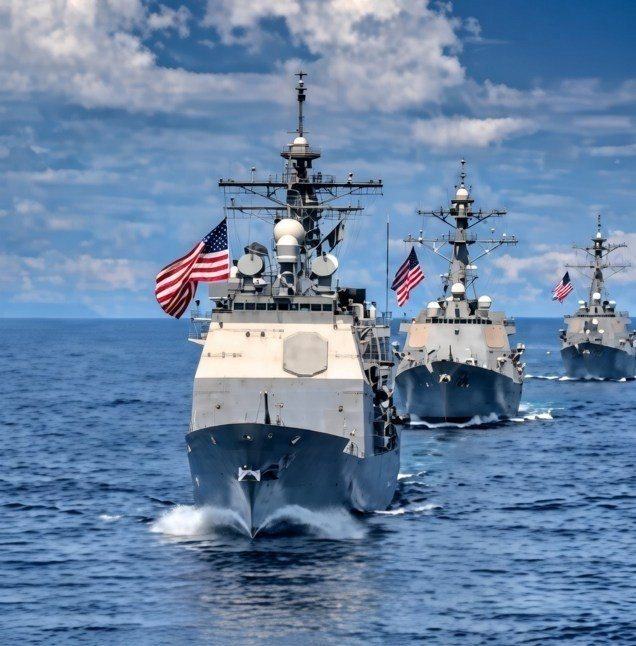
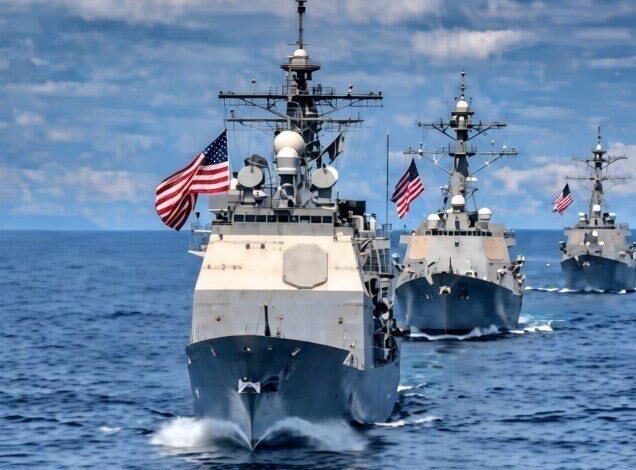
ed a violent breaking point. In a massive, coordinated military offensive, the United States and Israel launched “Operation Epic Fury,” a series of deep-penetration airstrikes targeting the Islamic Republic of Iran. This campaign, which began on February 28, was not merely a localized skirmish but the opening salvo of a full-scale war. The strikes targeted critical infrastructure in Tehran, Isfahan, and Qom, including air defense batteries, drone manufacturing hubs, and ballistic missile silos. The most destabilizing report to emerge from these initial hours…
10 min ago! Breaking News – The US Launches the War!
The geopolitical landscape of the Middle East was irrevocably altered in late February 2026 when long-simmering tensions reached a violent breaking point. In a massive, coordinated military offensive, the United States and Israel launched “Operation Epic Fury,” a series of deep-penetration airstrikes targeting the Islamic Republic of Iran. This campaign, which began on February 28, was not merely a localized skirmish but the opening salvo of a full-scale war. The strikes targeted critical infrastructure in Tehran, Isfahan, and Qom, including air defense batteries, drone manufacturing hubs, and ballistic missile silos. The most destabilizing report to emerge from these initial hours was the death of Iran’s Supreme Leader, Ayatollah Ali Khamenei, a symbolic blow that shattered any immediate hopes for a diplomatic off-ramp.
The origins of this catastrophe lie in a multi-year buildup of proxy conflicts and failed nuclear negotiations. Throughout 2024 and 2025, the region was plagued by missile exchanges and Houthi-led attacks on commercial shipping in the Red Sea. Washington and Tel Aviv justified their 2026 intervention as a pre-emptive necessity, claiming that Iran’s advancing drone and missile programs posed an imminent existential threat to regional stability. However, the strikes did not achieve the swift “degradation” of enemy forces that military planners hoped for; instead, they ignited a multi-front conflagration.
Iran’s retaliation was swift and geographically expansive. Utilizing its vast arsenal of ballistic missiles and long-range suicide drones, Tehran struck back at Israeli urban centers and U.S. military installations throughout the Gulf. Bases in Kuwait, Bahrain, Qatar, and the United Arab Emirates became primary targets. While allied missile defense systems like the Patriot and Iron Dome intercepted a significant percentage of incoming threats, the sheer volume of the “drone swarms” ensured that several projectiles reached their targets. These strikes resulted in the first significant American combat casualties of the war, leading to somber public ceremonies led by President Trump, who vowed that the fallen would be honored through a decisive victory.
The war has since metastasized into a chaotic regional struggle involving numerous non-state actors. In Iraq, U.S. forces have re-engaged in active combat against Iranian-aligned militias in Jurf al-Sakhar, while Hezbollah has opened a northern front against Israel from Lebanon. This “mosaic of violence” has created a profound humanitarian crisis. In Iran, the sustained bombardment of urban centers has resulted in thousands of civilian casualties and mass displacement. Meanwhile, the global economy has buckled under the pressure of the conflict. Oil prices spiked immediately, surpassing $100 per barrel as the threat of a blockade at the Strait of Hormuz—the world’s most vital energy artery—became a looming reality.
International reactions remain fractured. While several key allies have offered political backing to the U.S.–Israeli coalition, much of Europe remains paralyzed by internal divisions over the humanitarian and economic fallout. The United Nations and major powers like China have issued urgent calls for a ceasefire, warning that the world is standing at the precipice of a global recession or a broader world war. Domestically, the American public is sharply divided over the lack of congressional authorization for the conflict and the potential for a long-term ground invasion.
As of March 2026, the strategic objectives of the war remain contested. The Trump administration has called for the “unconditional surrender” of the Iranian military apparatus, yet the resilience of regional proxies suggests a stalemate may be looming. With commercial air travel disrupted, energy markets in turmoil, and the death toll mounting on all sides, the conflict stands as the most consequential military event of the early 21st century. The world now watches a Middle East engulfed in flames, waiting to see if diplomacy can be salvaged before the strategic and human costs become irreversible.
