
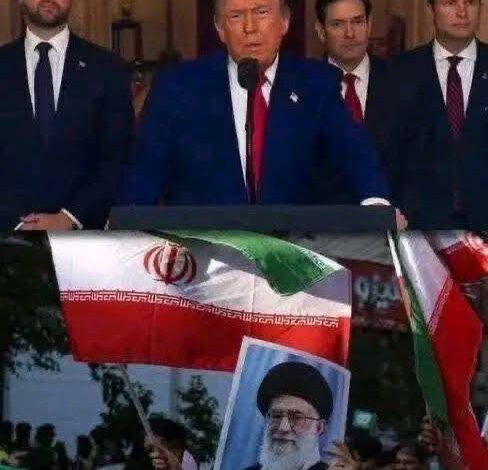
The geopolitical landscape of the early 21st century has often been defined by a precarious balance of power, but few moments in modern history have felt as volatile as the current friction between Washington and Tehran. Following the reported death of Iran’s supreme leader, a wave of high-alert status has swept through global defense headquarters. The speculation regarding a direct retaliatory strike on American soil has moved from the fringes of security analysis to the center of public anxiety. While the rhetoric of “total war” is frequently utilized by political commentators, the strategic reality of such a conflict is governed…
The geopolitical landscape of the early 21st century has often been defined by a precarious balance of power, but few moments in modern history have felt as volatile as the current friction between Washington and Tehran. Following the reported death of Iran’s supreme leader, a wave of high-alert status has swept through global defense headquarters. The speculation regarding a direct retaliatory strike on American soil has moved from the fringes of security analysis to the center of public anxiety. While the rhetoric of “total war” is frequently utilized by political commentators, the strategic reality of such a conflict is governed by a complex set of military doctrines, historical precedents, and the cold mathematics of modern warfare.
To understand the nature of a potential Iranian response, one must first examine the shift in Iran’s military posture over the last decade. Tehran has moved away from traditional conventional warfare, focusing instead on asymmetric capabilities—specifically its sophisticated ballistic missile program and its network of regional proxies. However, a strike on the United States mainland would represent a fundamental departure from this strategy. It would transition the conflict from a regional shadow war to a direct, existential confrontation. Analysts suggest that if such an event were to occur, it would likely not begin with a traditional invasion, but with a multi-layered offensive designed to bypass America’s geographical isolation.
The primary concern for U.S. homeland security in this scenario is cyber warfare. Experts have long warned that the first “shots” fired in a modern conflict between state actors would be invisible. Iran has invested heavily in its cyber offensive capabilities, targeting critical infrastructure such as the electrical grid, water treatment facilities, and financial systems. A coordinated cyber-attack aimed at a specific state or region—likely one with high economic or political significance—could cause widespread disruption, creating a sense of domestic chaos that serves as a force multiplier for any subsequent physical action. This “gray zone” warfare is designed to paralyze the target nation’s ability to respond effectively.
Beyond the digital realm, the physical geography of a potential strike is a subject of intense speculation. In military strategic circles, the “state” that an adversary might target is rarely chosen for its name, but for its utility. If a retaliatory strike were aimed at the U.S. interior, it would likely focus on nodes of the American “nuclear triad” or major command-and-control hubs. As nuclear historian Alex Wellerstein has noted in previous analyses of global conflict, attackers often prioritize disabling an opponent’s ability to fight back. This places high-risk categories over states like Montana, Wyoming, or North Dakota, which house the nation’s intercontinental ballistic missile (ICBM) silos. These are not merely administrative regions; they are the bedrock of the U.S. deterrent.
However, a strike could also target the coastal centers of political and economic power. The logistical complexity of a transcontinental strike means that an adversary would have to rely on advanced long-range capabilities or covert operations. States with major naval ports, such as Virginia or California, or those hosting the command structure of the U.S. government, like the District of Columbia and the surrounding Maryland and Virginia suburbs, remain at the top of the vulnerability list. The intent in such a scenario would be symbolic as much as it is strategic—to strike at the heart of the American identity and governance.
The current tension is exacerbated by the human factor. In the wake of a leader’s death, the internal dynamics of the Iranian government—specifically the influence of the Islamic Revolutionary Guard Corps (IRGC)—become unpredictable. History shows that during periods of leadership transition or perceived external threat, regimes often engage in “rally ’round the flag” behaviors, where aggressive external action is used to solidify domestic control. This increases the risk of miscalculation, where a tactical move intended to show strength is interpreted by the other side as the opening salvo of a full-scale war.
Deterrence remains the primary mechanism preventing this escalation. The United States maintains a global network of early-warning systems, including infrared satellites designed to detect the heat signatures of missile launches within seconds. Additionally, the U.S. Missile Defense Agency operates various interceptor systems, such as the Ground-based Midcourse Defense (GMD) and the sea-based Aegis system, which are specifically designed to neutralize incoming ballistic threats. The knowledge that a strike would likely be intercepted—and met with an overwhelming counter-response—serves as a psychological barrier that has historically held back direct state-on-state aggression.
Despite these safeguards, the “urgent” nature of modern headlines reflects a genuine erosion of the international order. The old rules of engagement, established during the Cold War, are being tested by a new generation of technological capabilities and shifting alliances. The involvement of other global players, such as Russia or China, adds layers of complexity to the situation. A strike by Iran would not happen in a vacuum; it would trigger treaty obligations and regional defense pacts, potentially drawing the entire Middle East and the NATO alliance into a conflagration that no one truly desires but everyone has prepared for.
The conversation about which state would be struck first forces us to confront the reality that in the 21st century, there is no such thing as a “safe” distance from global conflict. Our economies, our digital networks, and our military infrastructures are so deeply intertwined that a disruption in one part of the world creates an immediate ripple effect across the globe. Whether the “strike” is a missile, a computer virus, or a targeted assassination, the impact is felt in every living room across America. It serves as a sobering reminder that peace is a fragile construction, requiring constant maintenance through diplomacy, clear communication, and the restraint of those in power.
As the hours pass and the world watches for signs of movement, the focus remains on the “red lines” that define modern statecraft. The transition from tension to action is a threshold that, once crossed, cannot easily be walked back. The hope of the international community is that the mechanisms of de-escalation—the secret back-channels, the diplomatic intermediaries, and the shared interest in global economic stability—will prevail over the impulse for revenge. In the silent rooms where decisions are made, the cost of war is being weighed against the price of silence, and the future of the century may hang in the balance.
