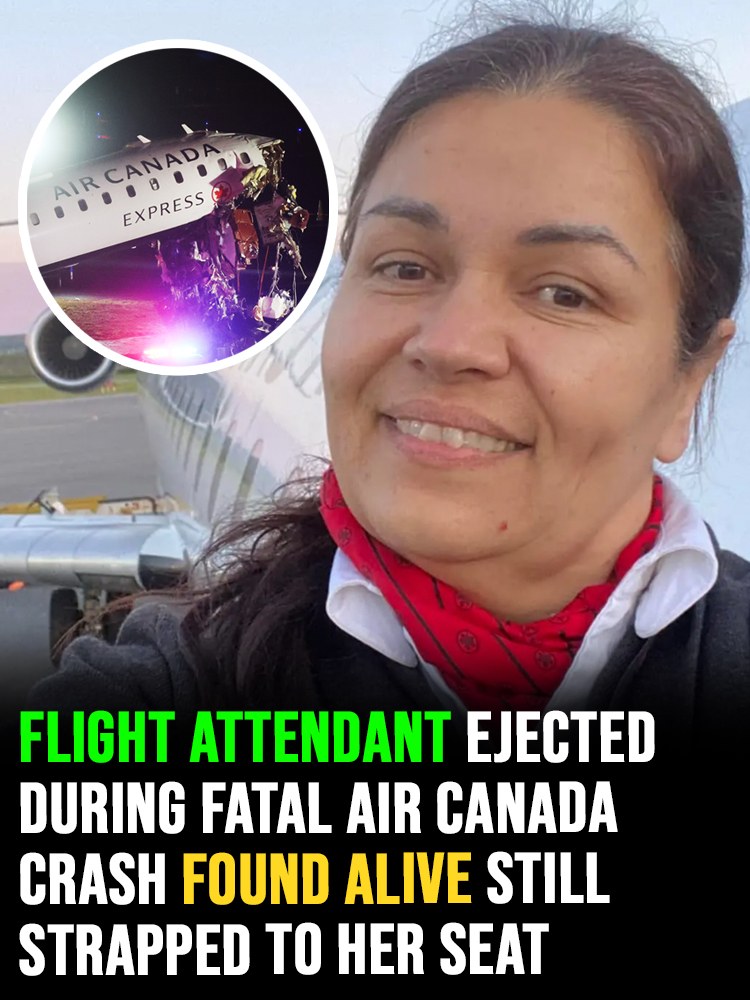
On Sunday afternoon at LaGuardia Airport, a tragic collision occurred when an Air Canada Jazz passenger flight struck an airport fire truck on Runway 4 during ground operations, leading to multiple fatalities and injuries. The aircraft involved, operating as Air Canada Jazz Flight 8646, was arriving from Montréal–Trudeau International Airport en route to LaGuardia with 72 passengers and four crew members on board when the collision took place unexpectedly. According to official statements, both the pilot and co‑pilot of the Jazz Aviation flight were killed…
Flight Attendant Survives After Being Ejected During Air Canada Crash, Still Secured in Seat
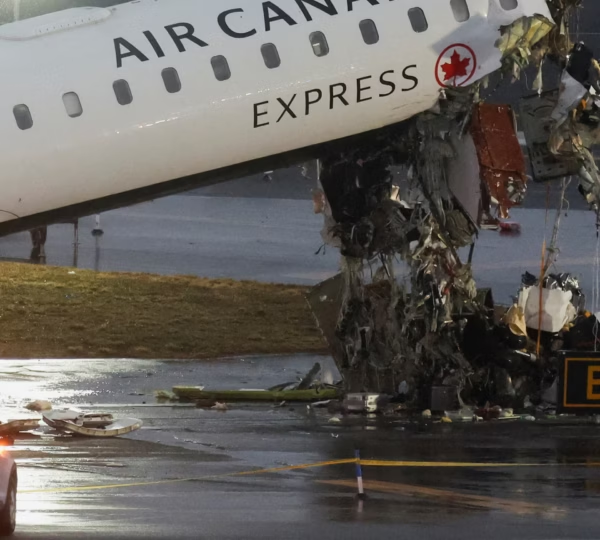
On Sunday afternoon at LaGuardia Airport, a tragic collision occurred when an Air Canada Jazz passenger flight struck an airport fire truck on Runway 4 during ground operations, leading to multiple fatalities and injuries.
The aircraft involved, operating as Air Canada Jazz Flight 8646, was arriving from Montréal–Trudeau International Airport en route to LaGuardia with 72 passengers and four crew members on board when the collision took place unexpectedly.
According to official statements, both the pilot and co‑pilot of the Jazz Aviation flight were killed on impact, marking a devastating loss for their families, friends, and colleagues in the aviation community.
A spokesperson for the Port Authority of New York and New Jersey confirmed that emergency responders pronounced both flight crew members deceased at the scene late Sunday afternoon.
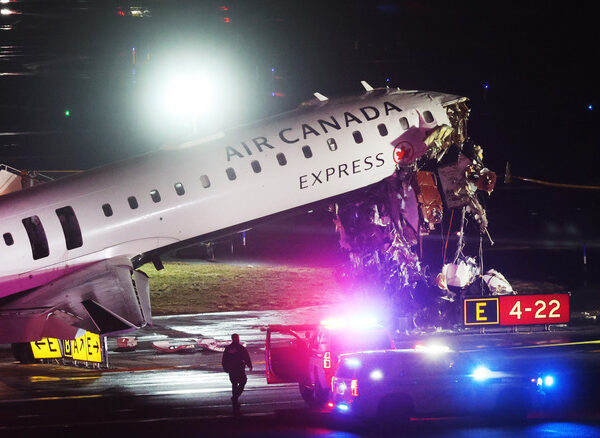
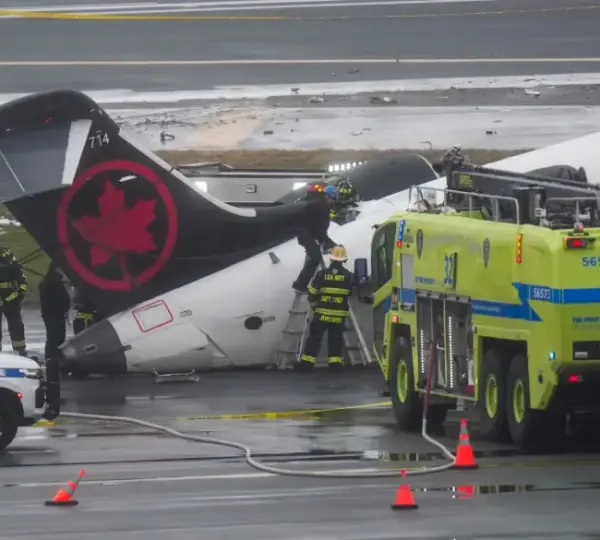
Emergency response units, including firefighters and airport rescue teams, immediately attended to the injured after the collision, which occurred during runway taxiing operations shortly after the aircraft touched down.
At least 39 passengers from the aircraft and two ARFF officers were transported to local hospitals in the New York area for treatment of injuries ranging from minor to serious, according to official reports.
Early on Monday, Air Canada issued an official statement expressing condolences to the families of the two employees who perished and noting that the airline was supporting those affected by the disaster.
The airline said it was “deeply saddened by the loss of two Jazz employees” and extended sympathy to their colleagues and the broader Air Canada Jazz community amid profound grief.
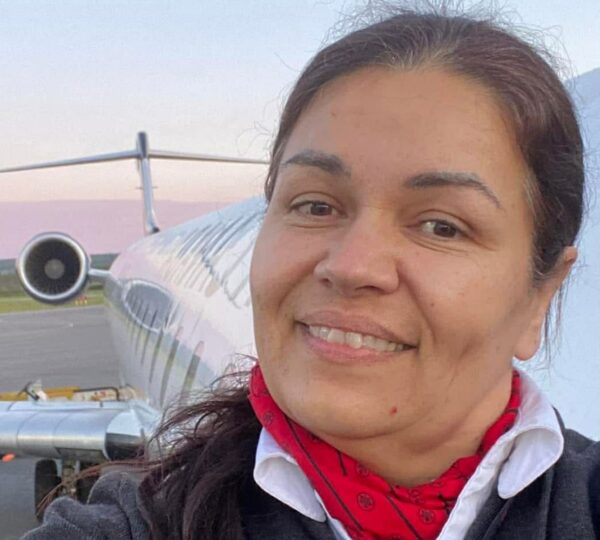
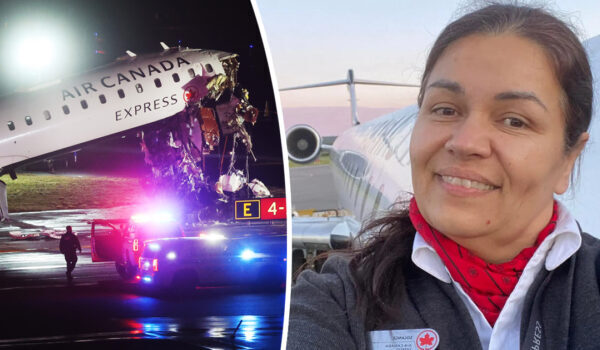
Among the injured was veteran flight attendant Solange Tremblay, a long‑serving crew member with Air Canada Jazz who has worked in the industry for more than two decades at the time of the crash.
Tremblay’s daughter, Sarah Lépine, spoke with Quebec’s TVA News on Monday and described her mother’s survival as nothing short of miraculous given the severity of the collision and aircraft damage.
Lépine explained that her mother had been thrown from the aircraft during the impact when her jump seat was forcibly ejected, yet Tremblay remained strapped into the seat when found.
According to the daughter, Solange’s seat was found more than 100 metres (over 300 feet) from the main aircraft wreckage, a location that underscores both the force of the impact and the fragility of the situation.
“It’s a complete miracle,” Sarah Lépine said, adding that her mother suffered multiple fractures and underwent surgery for a broken leg following the incident at LaGuardia Airport.
Medical teams treated Tremblay at a local hospital, where she remained in stable condition under observation for additional injuries sustained during the crash, according to family updates.
The remarkable survival of an ejected jump seat has drawn attention from aviation safety specialists, who note that such seating is engineered to withstand high crash loads for emergency roles.
In an interview with The Independent, aviation safety expert Jeff Guzzetti described Tremblay’s survival as “extraordinary,” particularly given the extensive destruction seen in the nose section of the aircraft.
Guzzetti, a former federal crash investigator, explained that flight attendant jump seats are typically bolted to reinforced bulkheads and designed to offer added protection to crew during sudden impacts.
“Those seats are very robust,” he said, emphasizing that they are built to help the attendant perform evacuation duties in extreme circumstances and may sustain higher crash forces than standard passenger seats.
Despite their robust design, the fact that Tremblay’s seat detached and travelled such a distance before landing with her securely strapped in remains highly unusual in aviation accidents of this type.
Investigators from the National Transportation Safety Board (NTSB) and the Federal Aviation Administration (FAA) are expected to examine both the collision sequence and structural failures to determine how and why this incident occurred.
Preliminary reports indicate that the aircraft was under ground movement control when the collision with the fire truck occurred, but official findings will depend on detailed analysis from multiple investigative bodies.
Airport authorities have confirmed that runway operations were temporarily suspended following the crash, leading to delays and diversions as emergency crews cleared the site and secured the area for investigation.
Eyewitness accounts detailed chaotic scenes on the runway, with responders quickly aiding injured passengers and moving others away from the aircraft wreckage to safety zones established nearby.
One passenger, speaking on condition of anonymity, said that moments after the collision “everything shook violently,” and people around them began shouting for help, underscoring the suddenness of the impact.
Emergency medical services arrived rapidly, and hospitals in the region activated trauma protocols to receive the influx of injured individuals brought in by ambulances and other transport units.
Representatives from Air Canada and Jazz Aviation have committed to assisting passengers and their families, including providing travel support, counseling services, and updates as further information becomes available.
Family members of the deceased crew members have been notified, and airline officials have expressed intentions to work closely with them through the grieving process and any subsequent inquiries.
Investigators will also examine airport ground procedures and communications between air traffic control, ground vehicles, and the flight crew to determine whether protocol or human error contributed to the collision.
The FAA has jurisdiction over civil aviation operations in the United States and will play a central role in reviewing flight data, crew communications, and airport ground surveillance footage as part of the inquiry.
In addition to federal agencies, LaGuardia Airport officials are cooperating fully with investigative teams and have pledged transparency regarding safety findings and any recommendations that emerge.
A wide range of aviation industry professionals and safety advocates have underscored the importance of learning from this tragedy to prevent future runway incidents involving aircraft and ground vehicles.
Runway incursions, including collisions between aircraft and ground vehicles, remain a key focus of FAA safety oversight efforts, with ongoing initiatives aimed at reducing such risks through technology and procedural enhancements.
The outpouring of support from the aviation community has been significant, with colleagues and industry groups honoring the service of the fallen pilot, co‑pilot, and injured crew members in public statements.
Tributes on social media and in aviation press outlets have highlighted both the dedication of flight crews and the shock felt across the sector in response to an incident of this severity at a major U.S. airport.
In the coming days, more details are expected as federal investigators reconstruct the sequence of events and release preliminary findings regarding the collision and its underlying causes.
Passengers who were aboard Flight 8646 have been encouraged to contact airline support teams for assistance with medical claims, travel arrangements, and any personal property recovery from the incident.
As authorities continue to investigate, the focus remains on supporting victims, honoring those lost, and understanding the full circumstances behind a tragic runway collision at one of the busiest airports in North America.
Flight Attendant Survives After Being Ejected During Air Canada Crash, Still Secured in Seat
On Sunday afternoon at LaGuardia Airport, a tragic collision occurred when an Air Canada Jazz passenger flight struck an airport fire truck on Runway 4 during ground operations, leading to multiple fatalities and injuries.
The aircraft involved, operating as Air Canada Jazz Flight 8646, was arriving from Montréal–Trudeau International Airport en route to LaGuardia with 72 passengers and four crew members on board when the collision took place unexpectedly.
According to official statements, both the pilot and co‑pilot of the Jazz Aviation flight were killed on impact, marking a devastating loss for their families, friends, and colleagues in the aviation community.
A spokesperson for the Port Authority of New York and New Jersey confirmed that emergency responders pronounced both flight crew members deceased at the scene late Sunday afternoon.
Emergency response units, including firefighters and airport rescue teams, immediately attended to the injured after the collision, which occurred during runway taxiing operations shortly after the aircraft touched down.
At least 39 passengers from the aircraft and two ARFF officers were transported to local hospitals in the New York area for treatment of injuries ranging from minor to serious, according to official reports.
Early on Monday, Air Canada issued an official statement expressing condolences to the families of the two employees who perished and noting that the airline was supporting those affected by the disaster.
The airline said it was “deeply saddened by the loss of two Jazz employees” and extended sympathy to their colleagues and the broader Air Canada Jazz community amid profound grief.
Among the injured was veteran flight attendant Solange Tremblay, a long‑serving crew member with Air Canada Jazz who has worked in the industry for more than two decades at the time of the crash.
Tremblay’s daughter, Sarah Lépine, spoke with Quebec’s TVA News on Monday and described her mother’s survival as nothing short of miraculous given the severity of the collision and aircraft damage.
Lépine explained that her mother had been thrown from the aircraft during the impact when her jump seat was forcibly ejected, yet Tremblay remained strapped into the seat when found.
According to the daughter, Solange’s seat was found more than 100 metres (over 300 feet) from the main aircraft wreckage, a location that underscores both the force of the impact and the fragility of the situation.
“It’s a complete miracle,” Sarah Lépine said, adding that her mother suffered multiple fractures and underwent surgery for a broken leg following the incident at LaGuardia Airport.
Medical teams treated Tremblay at a local hospital, where she remained in stable condition under observation for additional injuries sustained during the crash, according to family updates.
The remarkable survival of an ejected jump seat has drawn attention from aviation safety specialists, who note that such seating is engineered to withstand high crash loads for emergency roles.
In an interview with The Independent, aviation safety expert Jeff Guzzetti described Tremblay’s survival as “extraordinary,” particularly given the extensive destruction seen in the nose section of the aircraft.
Guzzetti, a former federal crash investigator, explained that flight attendant jump seats are typically bolted to reinforced bulkheads and designed to offer added protection to crew during sudden impacts.
“Those seats are very robust,” he said, emphasizing that they are built to help the attendant perform evacuation duties in extreme circumstances and may sustain higher crash forces than standard passenger seats.
Despite their robust design, the fact that Tremblay’s seat detached and travelled such a distance before landing with her securely strapped in remains highly unusual in aviation accidents of this type.
Investigators from the National Transportation Safety Board (NTSB) and the Federal Aviation Administration (FAA) are expected to examine both the collision sequence and structural failures to determine how and why this incident occurred.
Preliminary reports indicate that the aircraft was under ground movement control when the collision with the fire truck occurred, but official findings will depend on detailed analysis from multiple investigative bodies.
Airport authorities have confirmed that runway operations were temporarily suspended following the crash, leading to delays and diversions as emergency crews cleared the site and secured the area for investigation.
Eyewitness accounts detailed chaotic scenes on the runway, with responders quickly aiding injured passengers and moving others away from the aircraft wreckage to safety zones established nearby.
One passenger, speaking on condition of anonymity, said that moments after the collision “everything shook violently,” and people around them began shouting for help, underscoring the suddenness of the impact.
Emergency medical services arrived rapidly, and hospitals in the region activated trauma protocols to receive the influx of injured individuals brought in by ambulances and other transport units.
Representatives from Air Canada and Jazz Aviation have committed to assisting passengers and their families, including providing travel support, counseling services, and updates as further information becomes available.
Family members of the deceased crew members have been notified, and airline officials have expressed intentions to work closely with them through the grieving process and any subsequent inquiries.
Investigators will also examine airport ground procedures and communications between air traffic control, ground vehicles, and the flight crew to determine whether protocol or human error contributed to the collision.
The FAA has jurisdiction over civil aviation operations in the United States and will play a central role in reviewing flight data, crew communications, and airport ground surveillance footage as part of the inquiry.
In addition to federal agencies, LaGuardia Airport officials are cooperating fully with investigative teams and have pledged transparency regarding safety findings and any recommendations that emerge.
A wide range of aviation industry professionals and safety advocates have underscored the importance of learning from this tragedy to prevent future runway incidents involving aircraft and ground vehicles.
Runway incursions, including collisions between aircraft and ground vehicles, remain a key focus of FAA safety oversight efforts, with ongoing initiatives aimed at reducing such risks through technology and procedural enhancements.
The outpouring of support from the aviation community has been significant, with colleagues and industry groups honoring the service of the fallen pilot, co‑pilot, and injured crew members in public statements.
Tributes on social media and in aviation press outlets have highlighted both the dedication of flight crews and the shock felt across the sector in response to an incident of this severity at a major U.S. airport.
In the coming days, more details are expected as federal investigators reconstruct the sequence of events and release preliminary findings regarding the collision and its underlying causes.
Passengers who were aboard Flight 8646 have been encouraged to contact airline support teams for assistance with medical claims, travel arrangements, and any personal property recovery from the incident.
As authorities continue to investigate, the focus remains on supporting victims, honoring those lost, and understanding the full circumstances behind a tragic runway collision at one of the busiest airports in North America.
