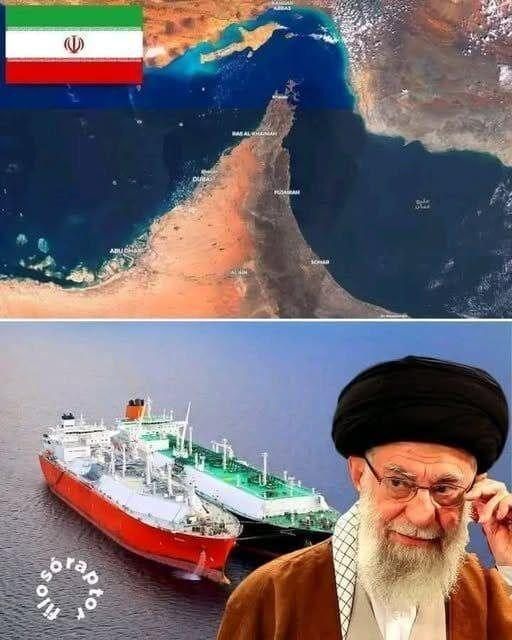
The global energy market depends heavily on several key maritime routes that connect oil-producing regions with international consumers. Among these routes, the Strait of Hormuz stands out as one of the most strategically significant waterways in the world. Located between Iran and Oman, this narrow channel serves as the primary passage for oil shipments from the Persian Gulf to global markets.
Every day, a substantial portion of the world’s petroleum exports travels through this corridor, making it a critical component of the international energy supply chain. Because of its geographic position and economic importance, the strait often attracts attention from policymakers, economists, and analysts who study global energy security.
This article explores the geographic characteristics, economic significance, historical background, and geopolitical considerations surrounding the Strait of Hormuz, while also examining its broader role in international trade and energy stability.
Geographic Overview
The Strait of Hormuz is situated at the entrance of the Persian Gulf, connecting it with the Gulf of Oman and ultimately the Arabian Sea. Despite its global importance, the strait is relatively narrow, measuring approximately 39 kilometers (about 24 miles) at its widest point.
However, the actual shipping lanes used by tankers are even narrower. International maritime traffic is typically divided into two channels—one for inbound vessels and one for outbound vessels—each only a few kilometers wide. Because of this limited space, maintaining safe navigation requires coordination and adherence to established international maritime regulations.
The strait is bordered by mountainous coastal regions and small islands, many of which play a role in regional navigation and security monitoring.
Role in Global Energy Transportation
One of the primary reasons the Strait of Hormuz is so widely discussed in economic and political circles is its role in global energy transportation.
A large percentage of the world’s oil exports pass through this route every day. Oil-producing nations such as Saudi Arabia, Iraq, Kuwait, and the United Arab Emirates rely on this waterway to deliver petroleum to international buyers.
Energy markets in China, India, Japan, and several European nations depend on these shipments to meet domestic demand. As a result, any disruption to the strait has the potential to influence global oil prices and supply chains.
In addition to crude oil, significant quantities of liquefied natural gas (LNG) also pass through the region, particularly from Qatar, one of the world’s largest LNG exporters.
Economic Significance
Because such a large volume of energy resources moves through the Strait of Hormuz, the waterway plays an essential role in the global economy.
Energy prices are closely tied to supply stability. Even the possibility of shipping disruptions can influence market expectations and lead to fluctuations in oil prices.
Energy analysts often monitor developments around the strait to assess potential impacts on:
- Global fuel prices
- Shipping insurance costs
- Energy market stability
- International trade routes
For countries that rely heavily on imported oil, maintaining secure access to these shipping lanes is an important element of national economic planning.
Historical Context
The strategic importance of the Strait of Hormuz is not a recent development. For centuries, the region has been a vital crossroads for trade between Asia, the Middle East, and Europe.
During the age of maritime exploration, control of key waterways became an important objective for empires seeking to expand their commercial influence. Various powers attempted to secure footholds along trade routes to ensure the safe passage of valuable goods.
In the modern era, the discovery and large-scale production of petroleum in the Persian Gulf dramatically increased the importance of the strait. As global industrialization accelerated during the 20th century, oil became one of the world’s most valuable commodities.
Maritime Security and Navigation
Given its importance to global trade, the Strait of Hormuz is closely monitored by international maritime authorities and regional governments.
Commercial vessels navigating the strait must follow established traffic separation schemes designed to reduce the risk of collisions and ensure safe passage. These systems are similar to highway lanes on land, guiding ships in designated directions.
Naval forces from several countries periodically operate in the broader region to support maritime safety, protect commercial shipping, and ensure freedom of navigation under international law.
Alternative Export Routes
Because the Strait of Hormuz represents a potential bottleneck in global energy transportation, some oil-producing nations have developed alternative export routes.
For example, pipelines have been constructed that allow certain volumes of oil to be transported to ports outside the Persian Gulf. These pipelines provide additional flexibility in the event of shipping disruptions.
However, even with these alternatives, the majority of regional oil exports still rely on maritime transport through the strait due to its efficiency and cost advantages.
Environmental Considerations
Another important aspect of the Strait of Hormuz involves environmental protection.
The surrounding marine ecosystem supports a wide range of species and plays a role in regional fisheries. Heavy shipping traffic increases the importance of strict safety regulations to prevent oil spills and other environmental hazards.
International maritime organizations work with regional authorities to promote responsible navigation practices and reduce the risk of ecological damage.
Environmental monitoring programs track water quality, marine biodiversity, and shipping impacts in order to maintain the health of the region’s ecosystem.
Global Trade and Supply Chains
Beyond energy exports, the Strait of Hormuz is also part of broader global trade networks.
Container ships, bulk carriers, and other cargo vessels regularly transit nearby waters while transporting goods between Asia, the Middle East, and Europe. This connectivity reinforces the strait’s position as a critical node in international shipping.
As global trade continues to expand, maritime corridors like the Strait of Hormuz remain essential to the movement of goods and resources around the world.
Technological Advancements in Maritime Monitoring
Advancements in satellite tracking, navigation technology, and maritime communication have significantly improved the monitoring of shipping activity in the region.
Modern vessels rely on automated identification systems (AIS), satellite positioning, and digital navigation tools to maintain safe distances and coordinate movements with nearby ships.
These technologies help maritime authorities detect potential hazards, manage shipping traffic, and respond quickly to emergencies.
Energy Security and International Cooperation
Ensuring the continued stability of global energy supplies requires cooperation among many nations. Because the Strait of Hormuz is such a crucial part of the global oil transportation network, maintaining its accessibility is widely viewed as a shared international interest.
Diplomatic dialogue, maritime agreements, and international law all play roles in supporting safe and predictable shipping conditions.
Organizations involved in maritime governance encourage transparency, communication, and adherence to established regulations to minimize misunderstandings and ensure safe navigation.
Future Outlook
Looking ahead, the importance of the Strait of Hormuz is likely to remain significant for the foreseeable future.
Although many countries are investing in renewable energy sources and diversifying their energy portfolios, oil and natural gas continue to play a central role in global energy consumption.
As demand evolves, shipping volumes through the strait may fluctuate, but the waterway will likely remain a vital link connecting major energy producers with international markets.
At the same time, continued technological innovation, infrastructure development, and international cooperation will shape how the region adapts to changing global energy dynamics.
Conclusion
The Strait of Hormuz represents one of the most strategically important maritime corridors in the world. Its geographic position at the gateway of the Persian Gulf makes it a crucial route for transporting oil, natural gas, and other goods to international markets.
Because such a large share of the world’s energy supply passes through this narrow channel, the stability and safety of the strait have global economic implications.
From its historical role in regional trade to its modern significance in global energy logistics, the Strait of Hormuz remains a focal point for discussions about maritime security, economic stability, and international cooperation.
Understanding the role of this waterway provides valuable insight into how geography, energy resources, and global trade networks are interconnected in today’s world.
